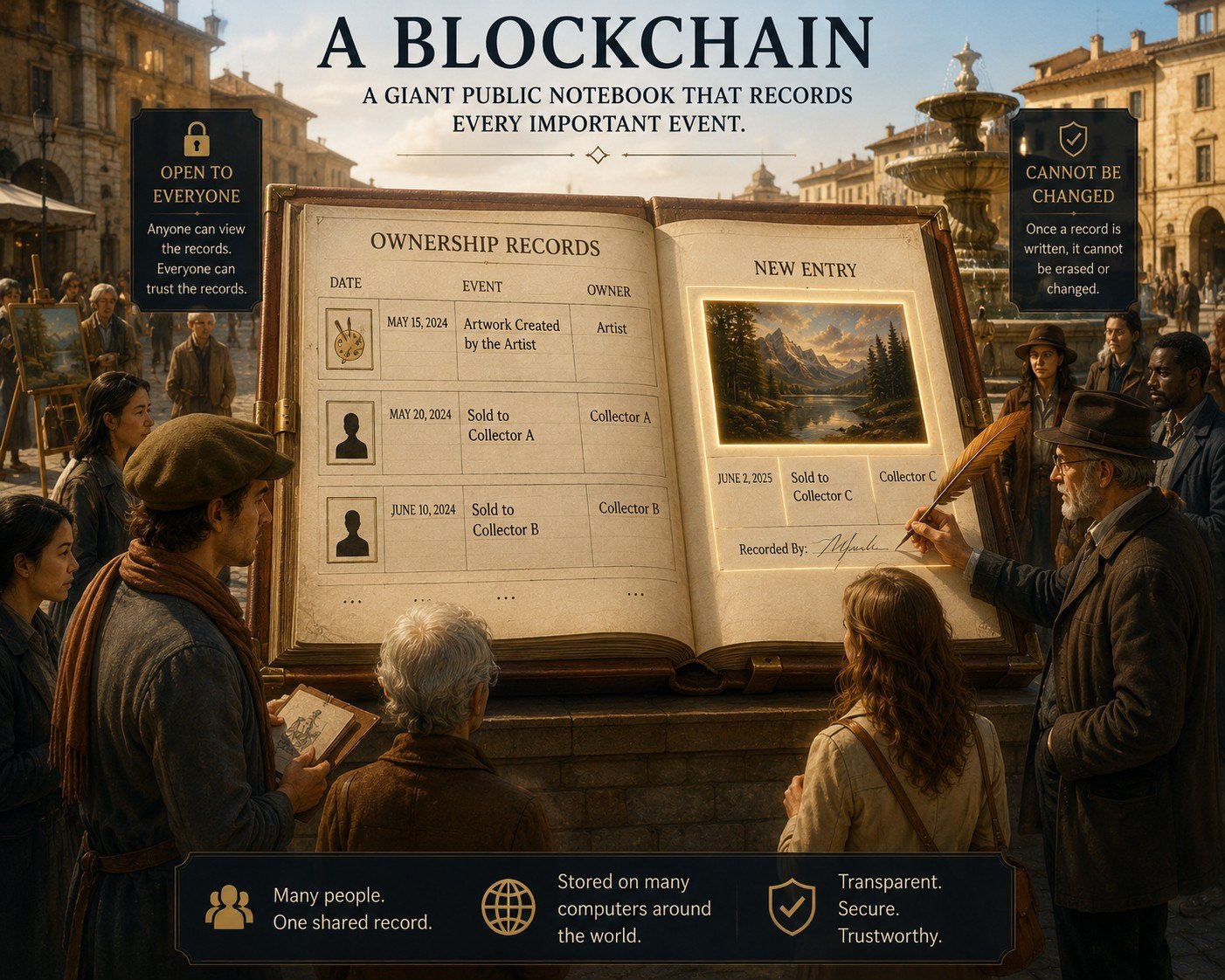
For centuries, fine art ownership has worked in much the same way. An artist creates a work. A collector acquires it. A certificate of authenticity may accompany it. Records are stored in galleries, archives, auction houses, and private collections.
As the world becomes increasingly digital, new questions are emerging. How do we preserve provenance? How do we verify authenticity? How do we track ownership across decades or even centuries? And perhaps most importantly: how do we ensure that artists remain connected to their legacy long after a work leaves their studio?
Ownership Has Always Evolved
Artists once relied entirely on local patrons. Then came galleries. Then international auctions. Then online marketplaces. Each innovation changed how art was discovered, bought, sold, and collected. Today, blockchain technology may represent the next chapter in that evolution.
The Importance of Provenance
When collectors purchase fine art, they are not only buying an object — they are buying a story. Who created the work? When? Who has owned it? Where has it been exhibited? In many cases, provenance can be just as important as the artwork itself.
A New Chapter
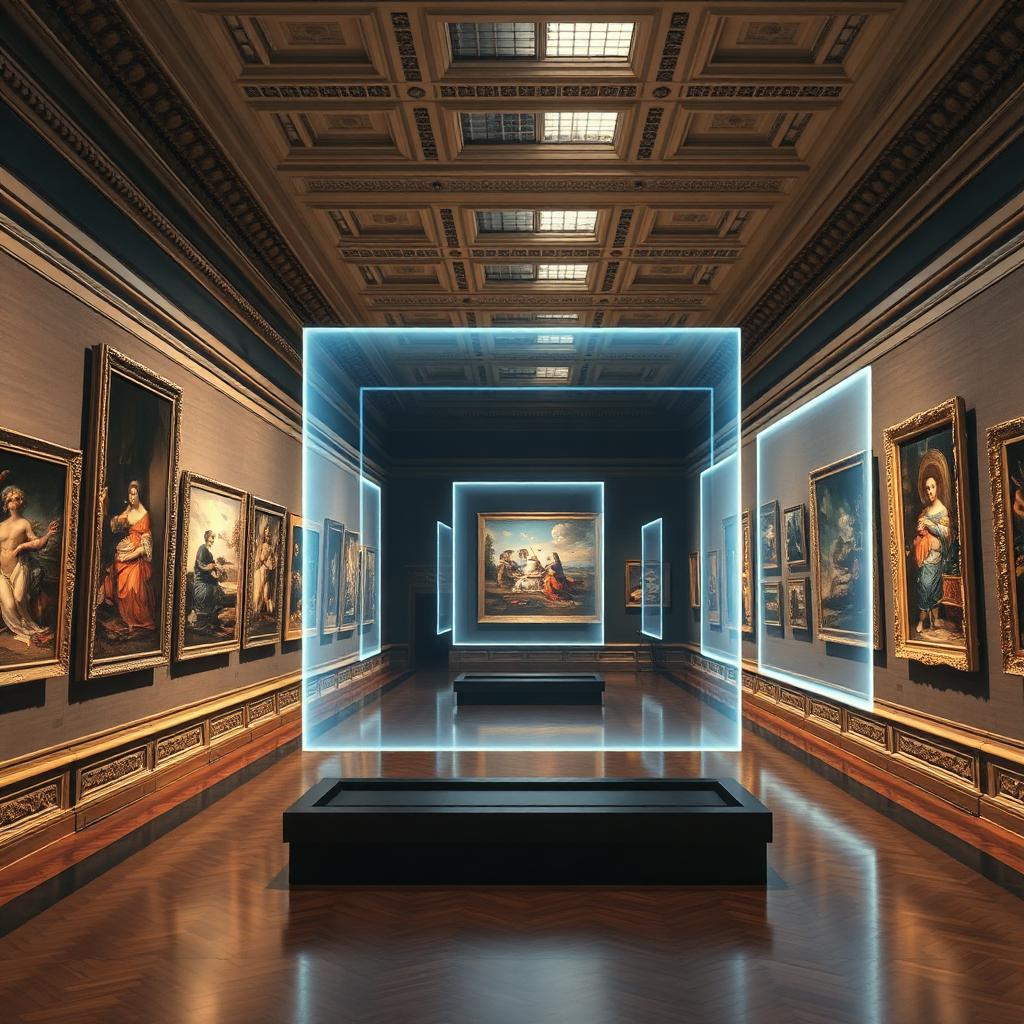
Mintelier exists at this intersection — preserving the traditions that have shaped fine art for centuries while embracing the tools that can carry artistic legacy forward into the next.