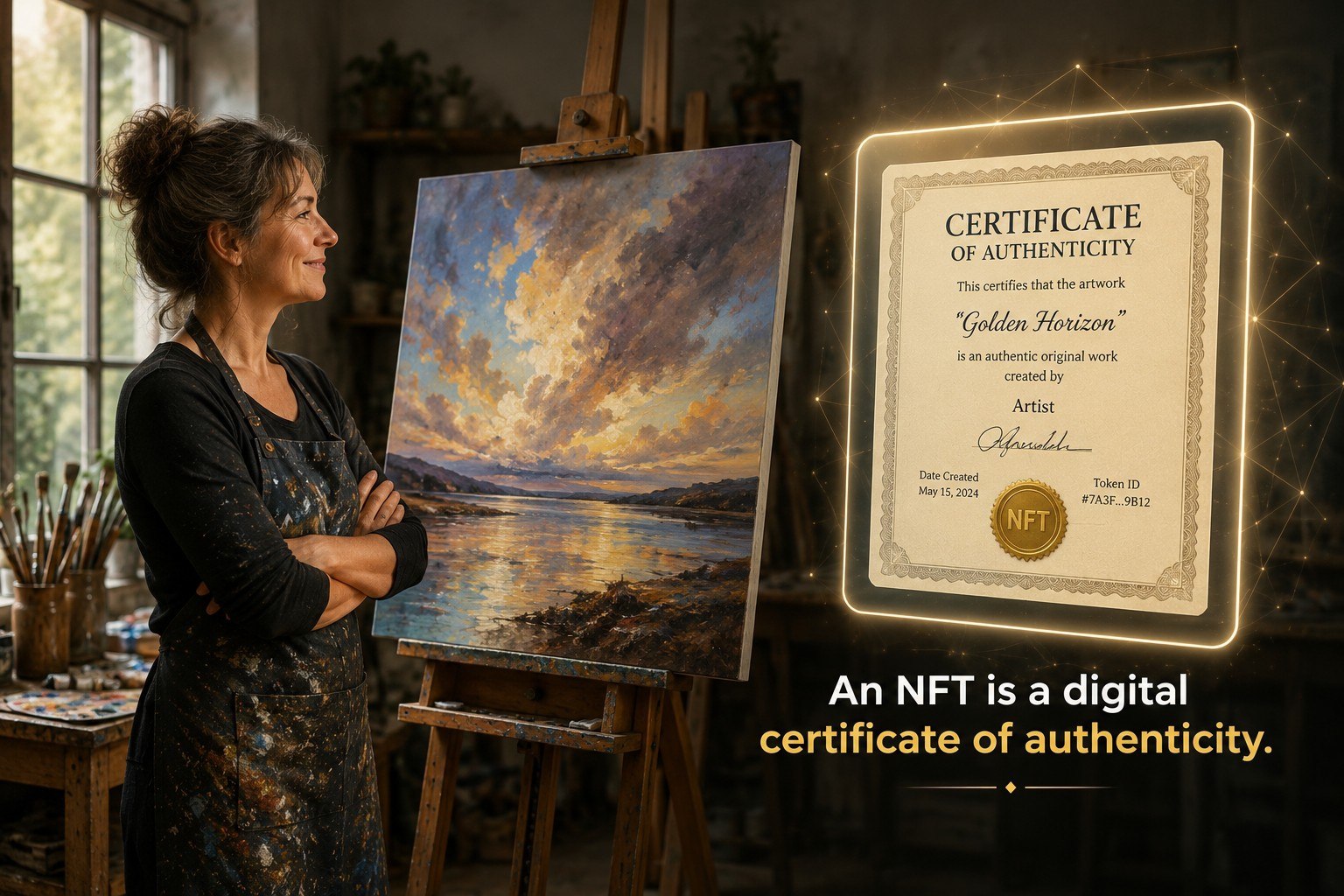
For centuries, artists, galleries, museums, and collectors have relied on certificates of authenticity to prove that an artwork is genuine. As the art world becomes increasingly digital, a new question is emerging: could NFTs become the next generation of certificates of authenticity?
The Problem With Traditional Certificates
Paper certificates can be lost, damaged, stolen, forged, or separated from the artwork. Imagine buying a painting fifty years from now — the artwork survives, but the certificate is missing. Proving authenticity suddenly becomes more difficult.
Enter the NFT
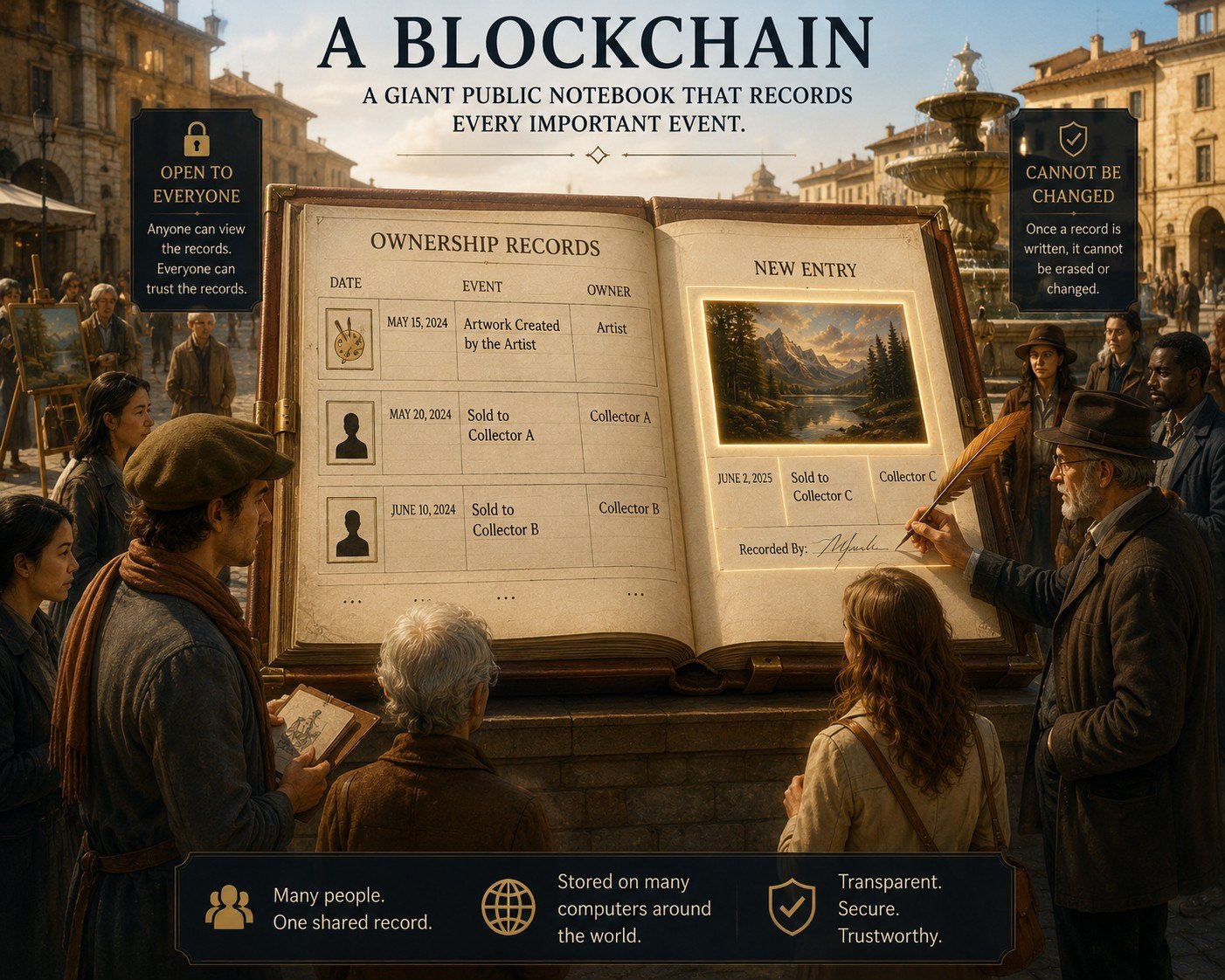
An NFT can be thought of as a digital certificate attached to an artwork. Unlike a paper certificate, it includes a permanent record of who created the artwork, when, who owns it, and every transfer of ownership. Instead of existing in a filing cabinet, the record exists on the blockchain.
Provenance Made Simple
Provenance is the documented history of an artwork. Traditionally, these records may be scattered across galleries, auction houses, and private archives. NFTs bring this information together into a single, accessible record.
Beyond Digital Art
NFTs can also be linked to physical works. Imagine purchasing an original painting and receiving the physical artwork, a signed certificate, and an NFT recording its provenance — an additional layer of authentication. A bridge between the physical and digital worlds.
So, Will NFTs Replace Paper Certificates?
Nobody knows for certain. But NFTs offer something traditional certificates struggle to provide: a permanent, transparent, and verifiable record of authenticity and ownership.